Customer Helps To Spread The Word

Patience is something that biotech company Symprove has had to learn in bucketfuls over the last few years but customer Lynette McMeekin could not keep her experiences to herself a moment longer. “People need to know about Symprove and the work the company is doing. I’ve been a customer for some time now and the Daily Mail often runs stories on probiotics and Symprove is totally different.”

As a probiotic food supplement, Symprove is regulated by the Food Standards Agency and like any other probiotic product on the market today, cannot make health claims or mention symptoms or condition. The only way a company can, is by going through the official channels and these are directed by the EFSA (European Food Safety Authority). Even then, companies have to put in specific health claims for approval and to date, not one probiotic company has been given the thumbs-up. It’s tough and particularly if companies have carried out extensive human studies, as the rules say, you can’t refer to studies either. Getting through the EFSA process can also take some time, anything from 6 months to a year.

Having said all this, the company Symprove feel strongly, that a reasonable amount of regulation is needed in its industry sector. “As an ethical company, we have a responsibility to our customers and the industry as a whole, and whilst we can’t make health claims right now, we’re working hard towards proving the efficacy of Symprove. Tough measures are needed and some probiotic companies recognise the importance and value of meeting and managing consumer expectations,” says CEO Mike Butler. He went on to say, “Of course, it’s a challenge and an unusual position to be in, as not many companies or industry sectors are restricted in the way they can talk about product benefits so we have to try that much harder. We very much rely on our customers spreading the word.”

Of course, there are lots of ways for people to find out how to assess which probiotics are best for them. The FAO/WHO also gives specific guidelines but in essence, if you follow these principles, you’ll be able to make informed decisions:

Choose a probiotic which doesn’t trigger digestion in the stomach. Any probiotic contained in yoghurt or a food does.

Make sure the company talks about the delivery system and what this does to ‘safely’ transport bacteria through the stomach to the gut. Probiotic bacteria struggle in acidic environments and find it difficult to cope with any extremes, needing some sort of protection or shield.

Choose a probiotic where the bacteria are ‘alive’ and ready to get to work from the moment they are swallowed and opt for multiple strains too. Individual numbers of bacteria are one thing but rather than focus on tens of billions, think quality and colonies – or CFUs – and what the bacteria are able to do to establish these units efficiently and quickly.

Think carefully before buying freeze-dried probiotics. Taking live bacteria down to temperatures of (minus) -80⁰C affects their functionality and they are no longer ‘alive’. Hanging around in this state for any length of time can’t be good, and when swallowed, for many it’s some hours before they can do anything. When capsules or powders are rehydrated, many of them have lost their ‘limbs’ or pili. Research has shown that pili are believed to play a role in helping bacteria to adhere to the gut wall. Without them probiotic bacteria often end up way beyond where they need to be in the gut and cannot colonise.

And if companies do end up talking about the research they’ve done – make sure it’s done to Rome III criteria. This means studies have been carried out to the highest clinical standards – on humans – in spite of being a probiotic and you could say in this case, it’s even more important too!

How fit is your probiotic?

Event invitation … How fit is your probiotic?

People’s knowledge of gut health, its importance in relation to the immune system and other vital body functions, has undergone a huge change in the last decade. Health-conscious consumers are taking probiotics for a variety of reasons and increasingly looking for clear guidance from Healthcare Practitioners (HCPs) on what’s best. Today, growing numbers of practitioners are seeking scientifically-based probiotic solutions and the demand is rising for probiotics that are truly fit for role.

Discover why it’s important to be armed with the right information & knowledge

Find out why it’s vital to understand the key characteristics and qualities in choosing a science-based probiotic. Join Founder Barry Smith of Biotech Company Symprove, who has been involved in advancing nutritional science for more than 25 years. A natural presenter, Barry’s talk will cover probiotic landscape, formulation and the importance of selecting a science-based probiotic to support healthcare.

In practice

The proof of the pudding is in the eating …. or drinking as in the case of Symprove, and the company are delighted to be joined on the night by Laura Currie, Nutritional Therapist to share her experiences of Symprove and what it means for clients. Dianne Taylor, Nutritionist 4 Your Good Health will also step up and talk about practitioner support offered by the Symprove team, why it’s different visiting Symprove HQ, her journey so far and how practitioners can benefit. There will also be lots of opportunity for questions too.

When and where?

Wednesday, 2 November 6.30-8.30pm, CNM (College of Naturopathic Medicine), London W1, nearest tube Oxford Circus. Practitioners and members of the public all welcome.

Registration

You’ll need to register here http://howfitisyourprobiotic.com so you receive a 500ml bottle of Symprove on the night (retails at £19.50) … we need to make sure we bring enough!

We look forward to meeting you on Wednesday.


Symprove Can’t Wait To Be At CAMEXPO In October

Exhibiting for the first time at camexpo this year, Symprove is delighted to be taking part in the UK’s only dedicated complementary healthcare event. As Symprove enters a new phase this autumn with its proprietary multi strain next generation probiotic, there’ll be plenty of news to share with visitors attending the Show, who’ll find the Symprove team on Stand 2341 opposite BANT.

A multi-award winning event, the team organisers at Diversified Business Communications UK have arranged an impressive line-up of speakers forcamexpo this year who are covering many aspects of complementary medicine,health and nutrition. It goes without saying that many practitioners recognise the importance of powerful multi strain probiotics to support digestive functions and immune health. Word is spreading fast about the importance of taking a probiotic such as Symprove that is live and activated. Practitioners are quick to realise what a difference this format makes to the way the digestive system responds to Symprove and the impact it has for people who are looking for responsive ways to support digestive functions, nutritional health and wellbeing.

As a biotech company with strong scientific credentials, Symprove has spent the last 10 months introducing its live activated probiotic to health practitioners around the UK and received extraordinary interest. With no other activated multi strain probiotic like Symprove in the market worldwide, the Symprove format is a new kind of probiotic for healthcare practitioners and consumers alike. Live and activated from the moment it is swallowed, Symprove’s unique delivery system protects and carries 4 strains of probiotic bacteria directly to the gut without triggering digestion in the stomach. This is an important distinction to make and enables Symprove probiotic bacteria to work efficiently without being weakened or destroyed from acid attacks. These proprietary strains of probiotic bacteria begin to establish and colonise within 20 minutes of being swallowed which is faster than any other multi strain probiotic on the market today.

Now working closely with many leading healthcare practitioners who quickly realised the advantages of a live activated multi strain probiotic, they actively recommend Symprove to their clients as a daily supplement as well to address specific needs. Many of these clients have since been in touch with Symprove offering testimonials so that other people can hear what Symprove has done for them. Symprove are also delighted to be joined by customers during camexpo including Dianne Taylor, nutritionist and naturopath 4yourgoodhealth, who are keen to share their experiences of Symprove with other practitioners and visitors.

“When I learned of the technology of Symprove I got really excited,” said Dianne. “At last a probiotic that I could give to my clients that would show results and I was eager to spread the word. The fact that it’s a non-dairy liquid with bacteria that are very much alive and start to multiply within minutes really impressed me. To start with, I tried it on myself, my husband and a few of my clients for different digestive health reasons and the results were almost immediate.

The diets that we eat today have so much sugar in so many different forms. When we eat we are giving bullets to the oversized enemy army of bad bacteria. That army needs to be defeated by increasing the numbers of good bacteria to improve the immune system, digestive health and overall wellbeing. The best way to do that is to drink Symprove daily on an empty stomach.”

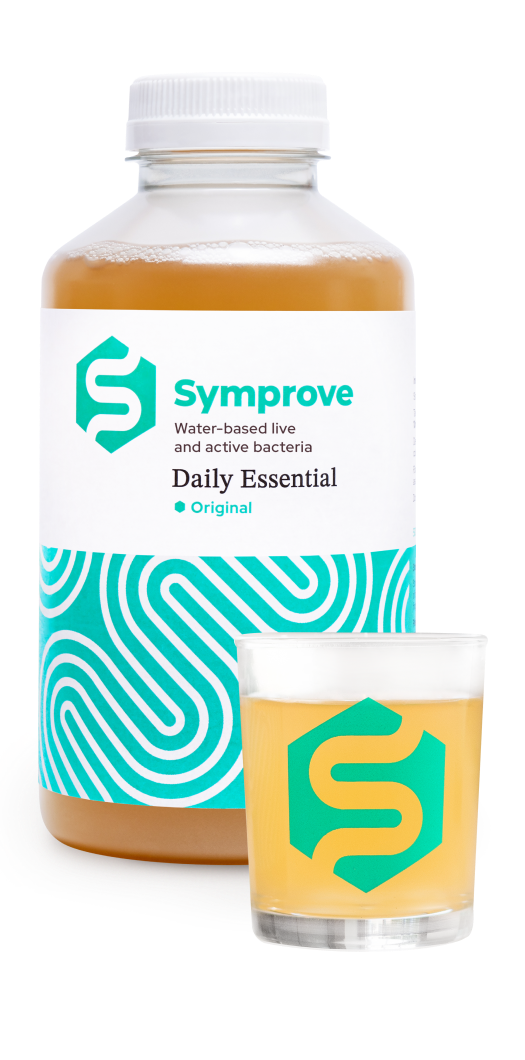
Symprove probiotic bacteria are nurtured on an extract of germinated barley – the substrate – which has been denatured during the sterilisation process thus making Symprove gluten free. As a water-based product, it’s also a good alternative for people who are lactose intolerant or have other allergies. Every 50ml serving of Symprove (about an egg cupful) contains at least 10 billion live activated probiotic bacteria.

For those practitioners who’d like to learn more about next generation probiotics such as Symprove, the company also host site visits and open days at Symprove HQ below the Hog’s Back near Farnham. They’ve proved very popular so far and include a tour of the production facilities as well as a buffet on the house and weather permitting, a visit to the beautiful organic vegetable and fruit garden – a real hit with Nutritional Chefs who usually leave with some fresh produce.

“Camexpo is an exciting event for Symprove and we’re delighted to be taking part. We have a huge amount of respect for healthcare practitioners and recognise the valuable and difficult work that they do. With this understanding, Symprove is keen to spread the word in as many ways as possible and is equally looking forward to taking part in the BANT cardiovascular conference the following weekend. It’s a busy year ahead for Symprove.”

Symprove Probiotic NEW Mango & Passion Fruit Now Available

Symprove has now gone fruity for those of you who’d like a different taste. We know that some people have been waiting a while for a new flavour, however, as a science-based company it was really important to preserve product integrity.For the last 6 months, we’ve been working closely with our flavour house and laboratory to ensure the probiotic bacteria in Symprove remain unchanged when introducing new and natural ingredients.

Symprove Mango & Passion Fruit works in exactly the same way as the original Symprove to deliver:

  • 4 different probiotic strains
  • At least 10 billion naturally occurring, live activated probiotic bacteria per 50 ml serving
  • The promised number of probiotic bacteria at any time of the products’ 5-month shelf life, to targeted areas within your digestive system where they can establish colonies (CFUs)

We’re still offering Symprove Original as it’s a favourite with many of our customers.

Now that we’ve taken action, if you decide to try our new Mango & Passion Fruit please let us know what you think. As one nutritional blogger said the other day, “Will report back after bottle necked.” We can’t wait to hear!


“Myriad microbes living in your gut make you who you are,” says recent report published in New Scientist.

A microbe or microorganism is unicellular or lives in a colony of cellular organisms. They are vital to humans and the environment, very diverse, mostly include bacteria and can be found in almost any habitat where there is nature. This habitat is collectively known as the biosphere and within our own human internal ecosystem, the vast majority of microbes are living in your gut and make you who you are.

Bacteria that live within the human digestive system contribute to gut immunity, synthesise vitamins such as folic acid and biotin, and ferment complex indigestible carbohydrates.The International Human Microbiome Consortium was set up to identify and study all the microbes living in our body and what purposes they have. Work so far has revealed that the ‘good’ and ‘bad’ bacteria in our gut need one another.They play a vital role in shaping our physical development, helping train our immune systems and providing us with the ability to carry out a set of finely regulated chemical reactions to maintain life – known as metabolic activities.In fact, the discovery of how important this relationship is between good and bad bacteria, is completely transforming the way these researchers are studying human biology. It is now becoming more and more apparent that so many conditions or illnesses could be a direct result with the relationship we have with our bioflora from the moment we are born.

Within the first few months of birth, gut flora undergoes huge changes several times as different species of bacteria establish and flourish responding to a baby’s needs and diet.By the age of 3, the gut microbiome has matured and the majority inhabit the colon. Whilst we all share a number of the same species, it is also becoming more widely accepted amongst scientists, that modern day living, stress and diet influence the variations and may have an impact on our health.

A healthy gut flora requires balance and helps to keep pathogenic bacteria in check by occupying the pockets within the gut where these bacteria would normally lurk. Given the space or opportunity, pathogenic bacteria invade these niches and this presents as illness, disease or generally feeling unwell.

The importance of gut microbes and what they are capable of doing falls under the study of metagenomics. This involves looking at collective genomes or microorganisms where genetic material is recovered directly from the microorganisms’ environment. The most detailed study was published by a European led consortium MetaHIT (Metagenomics of the Human Intestinal Tract) in 2010 who found over 3 million different microbial genes. Whilst each person doesn’t have all the microbial genes discovered, we all share a core group and these are responsible for at least 600 biochemical functions and are crucial to the survival of our human ecosystem. It is now much more apparent that we are dependent on our gut flora in regulating our biochemistry and metabolism. At Imperial College London, they have found that your gut microbiome can affect your ability to metabolise and respond to the painkiller paracetamol for example. The MetaHIT project also found that certain microbes responded to different toxins or food additives. This implies that the future of pharmaceuticals will have to take our microbiome into account when tackling illness and disease.

In the MetaHIT study it was found that people with diseases had an imbalance of gut flora and in some cases, such as IBD, had 25% fewer microbial genes. Right now, it’s not clear whether our gut bioflora actually cause health problems, or change as a result. However, as nutrition consultant Catherine Gladwin states, “The importance of healthy gut bioflora just cannot be emphasised enough. Replacing and balancing gut bioflora is an important step towards recovery. For example, clients with allergies and food intolerances are also shown the link between compromised gut bioflora and how they have developed an inappropriate immune response in the first place. The effects of having a healthy population of good bacteria in the digestive system can’t be overstated.”

Researchers are now questioning whether modern day living is having a detrimental effect on the ecology of our microbiome? With obesity, IBS, diabetes, some cancers and autoimmune diseases increasing within western cultures, perhaps this is the case. It’s also widely known that the overuse of antibiotics severely compromise gut flora as well as becoming resistant to illness. Whilst over time, gut flora can build back up, for many people in the western world poor diet and stress has an effect. The ecology or natural balance of our gut microbiome struggles and is weakened, needing some additional help, by topping up the gut with a good probiotic.

A good probiotic is live and crucially activated enabling bacteria to quickly establish and multiply in the gut. This helps to redress the balance as well as better enable our biochemical functions. In reality, probiotics have been in development for at least 10 million years as humans and probiotic bacteria have been living in harmony forever. However, it’s only in recent decades that scientists have come to realise how important that relationship is. By taking control and helping yourself and by applying a health-caring approach to modern everyday living, this could go a long way towards a healthier you. It would also take some strain away from the National Health Service which could really be referred to as a disease care and cure service. The Chinese have long since realised the importance of self-care. Their philosophy and approach for health has always centred on prevention, teaching people from an early age to take responsibility for their health and well-being on an ongoing basis. As Sun Si Miao said, “For the human body to remain in a healthy and balanced state, nothing else is required but to care about its nourishment.”

Understanding the intricate relationships of our human internal ecosystem is vast and as Claire Ainsworth reported in New Scientist, “It is one of the most daunting tasks facing biologists today. So it is perhaps fitting that tackling these complex questions, will require cooperation across a diverse range of disciplines.”

Symprove Gluten Free Awareness Week

It’s been hectic over the last few days with various important health events taking place on our planet so here’s a quick recap on Days 2 & 3 of GF week.

Made Lulo’s delicious risotto recipe Tuesday night following goat’s cheese salad at lunchtime. Thank goodness there are so many people blogging and providing intolerance and gluten free recipes out there because this means I don’t have to think quite so hard about what to eat and they provide great guidelines too. See http://www.cookingwithoutingredients.com/ and http://glutenfreegoddess.blogspot.com/p/site-index.html.

Breakfast most days doesn’t vary much – a serving of Symprove and a bit later on, some fresh fruit and oh, discovered some gluten free croissants so that made me happy!  We decided to go out for lunch on Day 3 and struck gold in terms of gluten free friendliness at La Calendula in Girona. We’ve had many lunches here because all their ingredients are ecological and the chef/owner has a great knowledge when it comes to using herbs and flowers in her cooking (and happens to have written a book too). But yesterday was the first day I noticed that the entire menu is either gluten free or a plate can be adapted. How cool is that? I don’t normally go around with my eyes shut and can only proffer my excuse for missing this in the past, with the fact that we normally look at the ‘Menu of the Day’ which isn’t marked up in the same way as the A La Carte. So the world (or menus) were my oyster! The freshest crab salad with a herby GF dressing, followed by seabass baked in the oven with a light vegetable aromatic broth and sweet roasted tomatoes.

Having eaten such a fab lunch and then got back from an afternoon appointment reasonably latish, supper was a light salad.

Tip: If you happen to visit Girona and are looking for a gluten free restaurant, I can highly recommend La Calendula.

Gluten Free Awareness Week Has Got Off To A Good Start

Symprove probiotic team member reports on Day 1. Being a big lover of pasta, breads and pastries as well as an avid baker, taking part in the GF Awareness Week run by Coeliac UK was always going to be a challenge – and doubly so this week as I’m in Spain …. so it will be useful to see if I can provide any tips for those of you who may be holidaying here this year.

Day 1 started off …. as always ;) with a serving of Symprove (egg cupful) followed by a glass of chopped pineapple having read Miriam Stoppard’s morning health tips on their juicy benefits. Knowing that it would be hard to do without a mid morning croissant, I headed out to the bakers just in case they stocked anything gluten free – a resounding no! So it was on to the Health Food Shop to buy gluten free bread for toasting. It’s not that easy to find gluten free products in the general supermarkets similar to those in the UK so health shops are best. Whilst there I bought various gluten free flours with the idea of baking some GF cakes and noticed some interesting looking sun-dried banana snacks at the till so grabbed a bag of them too.

Eager to get my partner involved (well it’s always nice to have company), I popped a chicken on the rotisserie and then got on with some work. A couple of hours later, we had a delicious lunch of chicken salad with fresh mango dressing (and made extra for another day), followed by strawberries.

Later in the afternoon I couldn’t help eyeing the bag of sun dried banana when I went to make a cuppa. DELICIOUS and chewy, almost like sweets and smell wonderful too! What a great energy snack. I think they’d taste just as good chopped into a gluten free cake.

Then it was time to dash out of town to run an errand getting back around 20.00 to make supper. I had a craving for red meat which is unusual as we don’t eat a lot of it so perhaps my iron levels were low. We opted for steak on the grounds that it was quick to cook with some steamed potatoes and sprinkled with chopped herbs.

Tonight, we plan to have a go at Lulo’s Risotto as her recipes suit people with all sorts of intolerances, see http://www.cookingwithoutingredients.com/ having had a meaty day yesterday. Will report back on Day 2 tomorrow.

Main observation:  With limited knowledge but knowing gluten can ‘show-up’ in all sorts of things, made a mental note to allow extra time to read ingredients lists carefully – particularly abroad!!  Very few products in Spain are marked gluten free.

What a Cracking Show!

Last weekend, Symprove took a stand at the Allergy & Gluten Free Show in London for the first time. Record numbers of visitors turned up – 10,588 to be precise! The show headline invited visitors to take control of their health – a message Symprove readily supports. Life is challenging enough from every spectrum so, if you can actively do something to support or self-manage your health and wellbeing, you’re off to a flying start. If you can help it, don’t wait ‘til the symptoms appear and if they already have – take control.

Saturday saw the busiest day (we’d go as far as to say it was barnstorming). We talked to hundreds of people who all had a story to tell and were keen to support themselves or help others. The Symprove team made great headway and didn’t stop for anything other than breath until a good 7 hours after the doors opened – not even for a few slurps of a cuppa! That’s a lot of talking ;) and something we’d happily do again and again – if it means that people have a better understanding of what probiotics are about.

Of course not everyone attending the Show was looking for probiotics – they’re not necessarily the first thing that springs to mind at an Allergy and Gluten Free Show. But as more and more people popped by the stand, it was priceless seeing the faces of people who ‘got it’ when the penny dropped. All it needed was a little explanation on how our digestive system works and responds to ‘friendly’ probiotic bacteria – and as importantly – how some probiotic formats tackle and manage this better than others. As with a lot of things in life, keeping ‘stuff’ simple can be more effective than attempting to complicate matters. Symprove steers clear of over-processing what are essentially naturally occurring good probiotic bacteria produced on an extract of germinated barley.  We don’t add any ‘artificial extras’ either and offer a lactose and gluten free water-based probiotic drink with no sweeteners, sugars or colourings. From the feedback we were getting at the Show, people with intolerances have struggled to find a liquid probiotic that is gluten and dairy free.

Misconceptions still exist but understanding the basics behind probiotics helps people to make more informed choices and this became apparent during the Show. There is a notion that some people think all probiotics, to all intents and purposes, have the same benefits. Others are unaware that probiotics contain specific strains and may have distinctive functions. And for many people, the viability of some probiotic products is rarely questioned as ‘clever’ marketing offers the consumer a loose benefit. So think twice before you head down the dairy aisle.

In order for probiotics to quickly work effectively and to their optimum, these delicate and ‘good’ bacteria need to be directed to specific sites within the intestinal tract without triggering digestion in the stomach. Triggering digestion can prevent many of the good bacteria from reaching where they need to be. For some probiotics, this is a challenge, as they are seen as food first and may never make it to the lower gut. Others, such as freeze-dried capsules or powdered sachets, take several hours to re-hydrate before they become active and start multiplying as first division is slow in hostile environments.

So if you’re looking for a probiotic that’s fast-acting to support digestive functions and healthy maintenance, then make sure it’s liquid but non dairy, live and activated. Being activated means that the probiotic bacteria can get to work from the moment you swallow the drink. Symprove probiotic bacteria start multiplying within 20 minutes – that’s fast. Many visitors at the Show had never stopped to think about how probiotics actually go to work and how their digestive system responds to them.

For various reasons, probiotics are viewed with scepticism by a few people and there was some evidence of this at the Show. However, it didn’t take long or much – just some solid explanations – to engage and win people round as to why it’s so important to use a good probiotic to support digestive functions and look after their health and wellbeing. For those people who want to read more take a look at some of the other Symprove blogs.

Finally, we’d like to thank everyone who popped by to say hello at the Show – customers, new friends, health practitioners, nurses, doctors, medical students, pharmacists, distributors and other exhibitors including BANT who pointed people in our direction. And if you’re still contemplating whether to try a non dairy gluten free liquid probiotic drink and have any questions, please get in touch with one of the team. As we said at the show, Symprove your health!

Enduro Racing Team KORR Drink Probiotic Symprove as Diet Supplement

Some of KORR team

KORR Enduro team stay healthy with Symprove probiotic. Proving they have the endurance of Man and Machine, top team KORR officially supported by KTM UK, is no stranger to winning events and has gained a string of Championship titles since 2004. Asked what makes his team so successful, Team Manager and KTM Technical Expert Julian Stevens said:

“We do everything in-house so that we have complete control and provide the best for our official pilots and riders. This includes everything from technical development to bike preparation and kit design.” He went on to say, “On top of this, we drive a solid training programme which also involves encouraging riders to have a healthy diet too and Symprove forms part of this. Endurance and reliability are key performance indicators and essential ingredients for the gruelling events we compete in.”

With a similar approach to Symprove, KORR management let results speak for themselves. Podium winners include Daryl Bolter current British E1 Class Enduro Champion, Greg Evans current European Enduro Champion KTM 350 XCF , James Giddings Expert E1 Champion KTM 125 EXC and new rookie signing Jonny “Whiskeyboy” Walker a former Schoolboy Trials Champion and Pinhard Trophy Winner.

Recently, Symprove Founder Barry Smith was invited to join the KORR team in Trefle du Morvan. Completing an average of 150 kms a day in the saddle,

Barry Smith, Symprove Founder

this course took the riders through some challenging countryside. Barry managed to keep up with the others and is going back to attempt the more knuckle-whitening rides of the Pyrenees later in the year.

Commenting on Symprove’s involvement with KORR Barry Smith said, “It doesn’t matter what sports discipline you’re in, health always features and plays a big part towards performance. We’ve also got a top international athlete drinking Symprove as part of his daily diet and training programme. These sportsmen all recognise the benefits of self-managing their health and we can learn a lot from their approach too.”

Mentioning Symptoms or Benefits is ‘Off-Limits’ for Probiotic Companies

NOT mentioning benefits or symptoms is a tricky business when conveying messages to potential customers. How many products or services do you read about that never cite a benefit or mention a need or concern? Our guess is not many. However, this is exactly how probiotic companies have to comply with regulators.

As a science-based probiotic company, we welcome regulation and the need to provide consumers and health practitioners with decisive information so they can make informed choices. To this end, we’re pulling out all the stops to meet these requirements, as well as the guidelines set by the WHO/FAO. However, as you can imagine, regulatory restrictions present a challenge for any probiotic company until they are in a position to seek approval following evaluation studies. Moreover, the challenge is even greater for the consumer. As a potential customer, you expect to read why a product or service may appeal, or help you. When it comes to health, it’s often useful to read testimonials or case studies where people have described their experiences. These provide valuable reference points and, in many cases, detail ‘the journey’ a person has undergone towards maintaining a better state of health. However, quoting customer experiences is off-limits too, so from time to time, we receive a comment such as this…

“You make a lot of woolly claims about possible benefits of this product and how it may or may not be better than other probiotics. Why don’t you do some proper research to see if your product helps people in the way you believe it might, and if so how? Then you could make meaningful claims and back them up with evidence.”

This is an accurate observation albeit a frustrating one for the company. Probiotics are classed as food and, to this end, must also comply with FSA (Food Standards Agency) regulations if they are marketed in the UK. In the last decade or two, scientists have come to realise the importance and role of probiotic or good bacteria in the gut – of which there are many strains. In addition, there are next generation probiotic companies currently undertaking evaluation studies. However, even if the results provide concrete evidence once the research has been concluded, companies are still not able to mention symptoms and benefits as probiotics are classed as food. Moreover, they cannot make “meaningful claims and back them up with evidence” without undergoing additional hurdles (and further investment) by submitting dossiers for approval at both UK and European levels – which all takes time.

At Symprove, we’re certainly not opposed to the regulations protecting consumers, particularly when it comes to health. In fact, we believe that efficacy is a requirement for any probiotic and should be backed-up with significant human scientific studies. We’re also aware that a probiotic product is not a panacea for poor health and, like the bacteria in our gut, has specific roles. However, we do get frustrated when we can only tell half the story. So, if you feel we’re making woolly claims, please remember we’d say a lot more if we could! In the meantime we’ve embraced these regulatory challenges and are working towards meeting all of the requirements. We have also taken the time to better explain on our website how the digestive system responds to different probiotic product formats. This builds on the video we released some time ago describing how probiotic bacteria ‘behave’ in our gut.

At the same time, we’re relying on consumer knowledge, as well as people’s desire to self-manage their health through discussions and posts on online forums. This is also supported by the upsurge of published scientific evidence - available for anyone to read on the Internet – pointing to the importance and benefits of probiotic bacteria and explaining how commensal bacteria are essential to human health.