

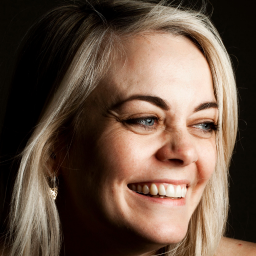
For over 40 years we've focused on understanding the gut microbiome and developing one product backed by world-leading scientific research - and behind that research is a team of scientists who think about bacteria for a living.
Meet Clemency Tilley, Senior Microbiology Scientist at Symprove. Don't let the job title fool you, Clemency is really a molecular biologist and strain engineer at heart, with a career that's taken her from engineering bacteria to produce Perspex from sugar during her PhD, to now looking under the hood of the very strains that go into your daily shot.
We sat down with her to talk sci-fi, strain engineering, and why keeping your Symprove bottle in the fridge matters more than you'd think.
What first got you interested in science?
"I was (and still am) a big reader of sci-fi and fantasy, and I always loved the characters that were really resourceful and technical – whether that be a magician or an actual scientist. I wanted to do the same thing! (And this was much easier than trying to become an astronaut)."
What's your academic and professional background?
"I studied Biochemistry with a focus on bacterial genetics at undergraduate level, then completed a PhD in industrial biotechnology afterwards (genetically engineering E. coli to produce Perspex from sugar). After my PhD, I went on to work in the US at a synthetic biology company called Ginkgo Bioworks, where I designed, built and tested organisms (mostly bacteria) to make new products or to do cool things. I’ve since also worked at a small start-up back in the UK, genetically engineering algae, before coming to Symprove."
When did microbiology specifically become the thing for you?
"Despite my job title, I wouldn’t say microbiology is my main thing – there’s a lot of flavours of biology, and I would actually call myself a molecular biologist and a strain engineer far more than a microbiologist. And it wasn’t a specific moment, just the result of lots of smaller decisions throughout my education and career."
What was your first job in the field, and what did you learn from it?
"My first job (after my PhD) was as an Organism Engineer in Boston, at a company called Ginkgo Bioworks. This was probably the most exciting start I possibly could have had, and I spent two and a half years learning from some of the best scientists I have met, working in labs that had the most state-of-the-art equipment (lots of robots), and getting to lead research projects with private industry, the government, and universities. I really learnt how to think fast and pick up new techniques at a rapid rate, it also gave me a start in using Python (a programming language) – which is now invaluable to me."
What led you specifically to Symprove?
"As with many things, it was a case of right place, right time – my role here at Symprove is a bit different to the research I’ve done before, there are a lot of constraints on the ways we can work as ultimately this is a food product for people to drink! It creates a lot of challenges that are fun (and frustrating) to solve."
What is it about bacteria that fascinates you?
"Bacteria don’t fascinate me, the methods scientists have created and developed using our understanding of bacterial genetics do! This may be too technical, but I think neat, simple solutions like combinatorial DNA assembly or CRISPR base editing are beautifully simple – but extremely powerful in their impact on what we can do with biology."
What's the most surprising thing about bacteria that most people don't know?
"Most people think of bacteria as simple or primitive, but genetically they can be edited and reprogrammed with a precision that rivals engineering a machine - that's not what people usually picture when they think "bacteria”. Also, to a lot of scientists E. coli is a very useful and safe working organism, not a pathogenic bacteria (it all depends on the strain!)"
Is there a particular strain or organism you find genuinely fascinating, and why?
"Sorry to be contrary, but no! One of my favourite parts of what I do is getting to work on many different organisms, each with their own quirks, capabilities, and mechanisms. Researching this whenever you start working on a new organism will always be fascinating - and no two organisms are ever the same."
What's your actual job title, and what does it mean in practice?
"My actual job title is ‘Senior Microbiology Scientist’, and in this role that means I’m the one who gets to really look under the hood of the strains we use at Symprove. What do their genomes look like? And how does that relate to how we see the strains behave?"
What does a typical day in your role look like?
"I would say that there’s no such thing as a typical day, or even a typical week for me. In research, your day-to-day is often driven by a need to answer a question or hypothesis – and what you do each day is all geared towards whatever might get you to the answer to the current question (or more likely questions) best."
What tools or equipment do you use most?
"If I ignore the really basic stuff like pipettes and the microbiological safety cabinet (which is probably the same answer for anyone!), at the moment I use the BioDrop (which can measure the purity and concentration of DNA in a tiny sample as small as 0.0005 mL) and the Pioreactors (tiny 40 mL vessels for growing and monitoring bacteria, that I have been setting up here at Symprove!). One is a stalwart of molecular biology work, and the other is very freeform platform development work, which requires a lot more learning of computer science for me!"
What's a task in your job that would surprise people if they saw it?
"All the cleaning! A key part of working with microorganisms is not getting contamination from everything around you (including yourself, and the air!)."
How much of your job is lab-based versus something else?
"Sometimes I will spend a whole week or more without needing to do lab work, particularly if I am reading papers and planning projects. Right now, I’m in the lab almost all day, every day."
What's the coolest part of your job that people wouldn't expect?
"Is it sad if I think the data handling is one of the coolest parts?"
What's a project you've worked on that you're genuinely proud of?
"In my last role, successfully researching and demonstrating a way to clone new DNA into a strain of algae that was over a hundred times more effective than our previous attempts – and completely changed the capability of our lab. This was one of those golden moments where a hypothesis actually bears out perfectly in practice."
What's something you get to do in your job that most people never get to see?
"People don’t get to see most of what I do in the lab! There’s a lot of lab ‘admin’ when you’re working with bacteria (from plating to cryostocking to growth screening and sequencing) that isn’t particularly flashy but is the backbone of a lot of work we do."
What's a skill you've developed here that you didn't expect to need?
"Learning how to image a Raspberry Pi – a circuit board that can be programmed as a tiny computer from scratch."
What's the most rewarding part of your job overall?
"Learning and thinking creatively all the time – and the fact that often everything you discover is chipping away at the edges of human knowledge, expanding our understanding of the world around us (a.k.a it’s pretty cool that everything you discover has potentially never been found out before!)"
What do you want people to understand about the people behind the product?
"The people at Symprove don't see it as a finished product. We're excited about continuing to actively research and improve the bacteria, the process, and everything in between."
What do you do outside of work that has nothing to do with science?
"Hiking whenever I can, the bigger the mountain the better (a difficult thing to find in Surrey!). Also, a lot of casual running (221 Parkruns and counting). I grew up on Dartmoor in Devon and I think that’s resulted in me pretty much wanting to be outside all the time. I’m also getting really into painting with watercolours at the moment, and I go to places like Wisley or Kew Gardens to photograph plants and flowers, or landscapes I’ve photographed when hiking to then paint at home."
If you weren't in this field, what do you think you'd be doing instead?
"If I wasn’t in science, I would like to write about science – I love the broad, interesting topics in science magazines like New Scientist, and I’d like to do something like that. Either that or start writing actual books!"
If you could tell every Symprove customer one thing about the science behind their daily shot, what would it be?
"Make sure to keep it in the fridge after opening! The bacteria prefer to be in an anaerobic (no oxygen) environment (like your gut) so as soon as you open that bottle to take the first shot, the cells left behind will not be happy. And if they try to start growing at that point, they will be even unhappier. Keeping them in the fridge (which should be about 4C) keeps them in a sort of static state where they will only try to grow very slowly and will hopefully keep them as healthy as possible before they go into your gut!"
Thanks, Clemency.
Find out more about our Symprove scientists
Meet Sasha Atmadjaja, Head of Research and Development at Symprove
Meet Georgia Milbourne, Fermentation Scientist at Symprove
To read more about other gut health topics, visit Symprove’s Gut Hub.
