

For over 40 years we've focused on understanding the gut microbiome and developing one product backed by world-leading scientific research - and behind that research is a team of scientists who think about bacteria for a living.
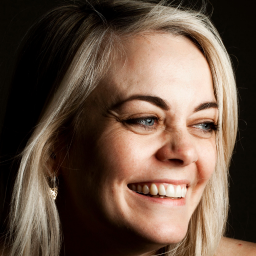
Meet Sasha Atmadjaja, Head of R&D at Symprove. With a career that's taken her from cloning jellyfish genes into E. coli as a teenager, to now overseeing the science behind every strain that goes into your daily shot of Symprove.
We sat down with her to talk about how she got into science, the art of harnessing chaotic biology, and what it really takes to keep billions of bacteria doing exactly what you want them to.
What first got you interested in science?
"There was no one thing that got me into science, I've always just been curious about how things work. At 8 years old I tried to make a weather system in a shoe box. I didn't realise at the time that it was an attempt at a science experiment, but I just learned about the water cycle and was fascinated by it. So, I made a mini Earth, a mini mountain, used cotton ball for soil and a light bulb for the sun. The light bulb obviously didn't heat up enough, but for a few days I genuinely thought I would see little clouds and weather patterns in that shoe box."
What's your academic and professional background?
"My degree was in Process Engineering, specialising in Fermentation Science. I've been working in industrial fermentation for 14 years now. I was lucky enough to know what I wanted to do quite early and made targeted career choices based on that."
When did microbiology specifically become the thing for you?
"Back in high school, I was participating in the Biology Olympiad representing my province at the national qualifying level (unbeknownst to most people, there is a whole world of international science competition involving high school children out there). We spent months of training and one of the modules was microbiology. In one of the lab sessions, we cloned a jellyfish fluorescence gene into E. coli. When the bacteria glowed under the UV light, I knew right then and there that this is what I want to do for the rest of my life. I was 15."
What was your first job in the field, and what did you learn from it?
"My first real job was a fermentation intern for a startup biotech company in New Zealand. It was six months of mostly cleaning bioreactors, but that allowed me to understand bacterial fermentation from the ground-up. It connects the science, the data, and the physical aspect of doing science.
What led you specifically to Symprove?
"A recruiter! Symprove felt like the right direction of movement career wise. Talking to Mike, Symprove's Chief Scientific Officer, felt like a good fit and gave me the right type of freedom to shape the direction of the science and the research."
What is it about bacteria that fascinates you?
"It's not necessarily about bacteria, but about fermentation. It’s that feeling of harnessing the wind. Working with biology and living things, there is that element of unpredictability and squishiness to the science. It is working with the chaos, finding a pattern in it, and harnessing its power."
Is there a particular strain or organism you find genuinely fascinating, and why?
“Not really because they're all slightly different. I managed to develop a fondness and fascination for whatever species or strain I ended up working with. I do have a favourite though, E. coli. It was my first love that got me into this career. It's such an easy bacterium to grow and work with as it's so well studied. The smell of pure E. coli freshly grown in lab media will always be a nostalgic one for me."
What's your actual job title, and what does it mean in practice?
“Head of R&D. I coordinate all the work in R&D (Research and Development) across the many different aspects of working with bacteria. As a team we try to understand our bacteria, what's the best way to work with them and grow them consistently in our product. We are also looking at how we can improve, extend, and expand the product. My role is to oversee that all these areas are progressing while scoping what comes next. I am also the champion of the bacteria, advising different parts of the business to make sure that whatever commercial decisions we are making are scientifically sound."
What does a typical day in your role look like?
"It depends on the day, but I usually start off by catching up with the team to check where we're at on various R&D projects. A lot of my time is then spent compiling the research work we've completed as a team, to share with various stakeholders across the business. It's my job to make sure that the work is progressing as planned, managing expectations, and keeping an eye on what’s next on the horizon."
What does your team look like, and how do you all work together?
"In my team we have four main functions. Core microbiology, looking at the bacteria itself and how they behave, developing new strains and species. Fermentation R&D is all about understanding and optimising how we grow bacteria for production purposes. Whatever innovation comes out of R&D will then need to be implemented at production level. This is the job for Process Transfer, bridging R&D and production, which also includes monitoring how the fermentation process is performing at manufacturing level and returning any insights back to R&D. And then QC (Quality Control), that involves in-house testing of production batches to ensure they meet specs prior to release, shelf-life testing, and other production monitoring checks."
What tools or equipment do you use most in your day-to-day work?
"Laptop and my brain. I'll also add in my whiteboard and e-notebook, because I need the physical act of writing and drawing things out to organise my thoughts."
What's a task in your job that would surprise people if they saw it?
"The amount of budget juggling and PO approvals. We do want to stay on the good side of the Finance team!"
What's the coolest part of your job that people wouldn't expect?
"Coolest part of R&D job at this level is actually connecting the dots and turning knowledge into strategy and action items."
What's a project you've worked on that you're genuinely proud of?
"At Symprove, it's definitely shelf life. Our product contains live and metabolically active bacteria in a liquid format. Most similar products in the market will either go on the chill aisle or have a safety best before date instead. We are holding ourselves to a higher bar of having an efficacious level of live bacteria in a shelf-stable product. This really is a microbiological puzzle and I’m so proud of all the efforts by my team in making this happen.”
What's a skill you've developed here that you didn't expect to need?
"At Symprove I have to be able to communicate quite niche and specific scientific concepts to different people at different levels of knowledge, in a way that is easy to understand and relevant to their need."
What's the most rewarding part of your job overall?
"It's the problem-solving bit. I enjoy applied science, looking at how we take a scientific concept that is cool and interesting and give it relevance to the real-world. Usually, the challenge is that biology doesn't naturally lend itself to commercialisation. Solving that puzzle, bending the biology and coming up with solutions that can be industrially scaled into something useful that benefits people and the planet, is what I enjoy."
What do you do outside of work that has nothing to do with science?
"I like baking, cooking, I like food in any form actually! I recently bought a house and am learning DIY. I've just adopted a cat, my first ever pet, so I'm getting used to having another living being in the house."
If you weren't in this field, what do you think you'd be doing instead?
"I like baking and food, so I think I'd open a bakery. Or maybe I'd run a supper club. Or open a cheese production factory because that'll be fermentation in a different way. Or, completely left field, maybe a wedding planner."
If you could tell every Symprove customer one thing about the science behind their daily shot, what would it be?
"It works because it's alive."
Thank you, Sasha.
Find out more about our Symprove scientists
Meet Georgia Milbourne, Fermentation Scientist at Symprove
Meet Clemency Tilley, Senior Microbiology Scientist at Symprove
To read more about other gut health topics, visit Symprove’s Gut Hub.
